
How Many Bags of Cement for a Slab? A Worked Calculation
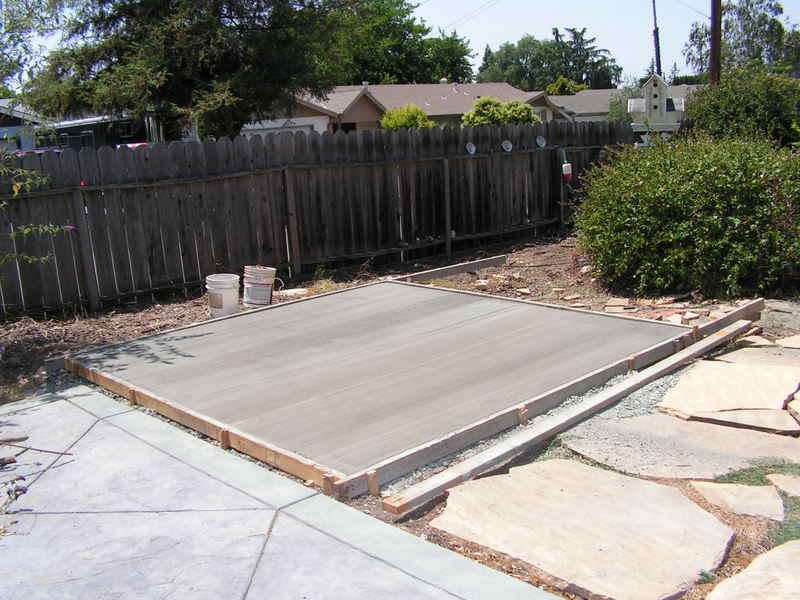
Knowing how many cement bags for slab Kenya projects require is one of the most important steps when preparing a concrete floor, suspended slab or other concrete surface. Buying too little cement can interrupt construction, while buying excessive quantities can unnecessarily increase costs and create storage problems.
The number of cement bags required depends on the slab area, thickness, concrete mix ratio, cement bag size, aggregate quantities and the amount of material lost during handling and mixing. A 50 mm concrete floor will obviously require much less concrete than a 150 mm structural slab.
For homeowners and contractors in Kenya, the calculation should therefore start with the volume of concrete required rather than simply estimating cement bags from the size of the house.
This guide provides a practical slab material calculation, explains common concrete mix ratios in Kenya, and gives a worked example showing how to calculate cement, sand and ballast.
Cement Bags for Slab Kenya: How Many Do You Need?
The number of cement bags needed for a slab depends mainly on concrete volume and the specified mix ratio. For preliminary estimating, a typical 1:2:4 concrete mix may require roughly 6–7 bags of 50 kg cement per cubic metre, but the exact quantity depends on the mix specification and whether the concrete is structural.
The first thing to establish is the volume of concrete.
Use:
Concrete volume = Length × Width × Thickness
For example, a slab measuring:
10 m × 5 m × 0.1 m
requires:
10 × 5 × 0.1 = 5 m³
of wet concrete.
Once the concrete volume is known, the required cement, sand and ballast can be calculated from the selected mix.
For a simple preliminary estimate, many small projects use a nominal volumetric mix such as 1:2:4.
However, structural slabs should not be specified purely from a generic internet ratio. The required concrete strength, reinforcement, exposure conditions, design loads and structural engineer’s specification must be considered.
Cement Bags for Slab Kenya: Worked Calculation?
A slab material calculation starts by determining the slab’s surface area and multiplying it by its thickness. The resulting concrete volume is then used to estimate cement, sand and ballast.
The basic formula is:
Concrete volume = Length × Width × Thickness
All dimensions should be converted to metres.
For example:
Length = 8 m
Width = 6 m
Thickness = 100 mm
Convert thickness:
100 mm = 0.10 m
Then:
8 × 6 × 0.10 = 4.8 m³
The slab therefore requires approximately 4.8 cubic metres of finished concrete before considering practical ordering allowances.
This is the foundation of the entire calculation.
If you incorrectly estimate the slab volume, every other material quantity will also be incorrect.
Cement Bags for Slab Kenya by Slab Size
To calculate cement bags, first determine the required concrete volume, then establish the cement quantity per cubic metre from the selected mix. Finally, convert the cement weight into 50 kg bags and include an appropriate allowance for wastage.
Suppose a project requires:
Cement Bags for Slab Kenya: 50 m² Example
and the selected nominal mix requires approximately:
6.5 bags of 50 kg cement per m³
Then:
5 × 6.5 = 32.5 bags
You would therefore need approximately 33 bags before allowing for additional site losses.
With a modest 5% allowance:
32.5 × 1.05 = 34.125 bags
A practical purchasing quantity would therefore be approximately 34–35 bags, subject to the actual concrete specification.
This is a useful estimating approach, but the cement content for structural concrete should ultimately come from the approved mix design or project specification.
Worked Example: Cement Bags for a 10 m × 5 m Slab
Consider a 10 m by 5 m slab with a 100 mm thickness. The slab has an area of 50 m² and requires approximately 5 m³ of finished concrete before adding a practical ordering allowance.
Step 1: Calculate slab area
10 × 5 = 50 m²
Step 2: Convert thickness
The slab thickness is:
100 mm = 0.10 m
Step 3: Calculate concrete volume
50 × 0.10 = 5 m³
Therefore:
Required concrete = 5 m³
Step 4: Estimate cement
Using an illustrative consumption of approximately 6.5 bags per cubic metre:
5 × 6.5 = 32.5 bags
Therefore:
Theoretical cement requirement = approximately 33 bags
Step 5: Allow for wastage
Using a 5% allowance:
32.5 × 1.05 = 34.125 bags
A practical order could therefore be approximately:
34–35 bags of 50 kg cement
This example demonstrates why knowing the slab volume is more important than simply asking how many bags a particular house requires.
How Much Sand Is Needed for a Concrete Slab?
The quantity of sand depends on the selected concrete mix and the total dry material volume required to produce the finished concrete. For a nominal 1:2:4 mix, sand represents two parts of the seven total mix parts by volume.
A 1:2:4 mix contains:
1 part cement + 2 parts sand + 4 parts ballast
The total is:
7 parts
However, you cannot simply divide the final wet concrete volume by seven and expect an exact material quantity. Dry aggregates contain voids and concrete undergoes volume changes during mixing.
A common preliminary estimating approach uses a dry-volume factor of approximately 1.54.
For the 5 m³ example:
5 × 1.54 = 7.70 m³
Total dry ingredients are therefore approximately:
7.70 m³
The sand portion is:
7.70 × 2/7 = 2.20 m³
So the preliminary sand requirement is approximately:
2.2 m³ of sand
An allowance may be required depending on handling, moisture, bulking and site conditions.
How Much Ballast Is Needed for a Slab?
In a nominal 1:2:4 mix, ballast represents four parts of the seven total mix parts. For a 5 m³ slab, a preliminary calculation gives approximately 4.4 m³ of ballast before practical site allowances.
Using the same dry volume:
5 × 1.54 = 7.70 m³
Ballast portion:
7.70 × 4/7 = 4.40 m³
Therefore:
Ballast ≈ 4.4 m³
The exact aggregate specification should depend on the concrete application.
For structural slabs, aggregate size and grading must be appropriate for the reinforcement arrangement, slab thickness and concrete design.
The term “ballast” is commonly used in Kenyan construction to refer to coarse aggregate, but the correct aggregate specification should follow the project requirements.
What Is the Concrete Mix Ratio in Kenya?
Common nominal concrete ratios such as 1:2:4 can be useful for certain non-structural estimating purposes, but structural concrete should be produced according to the required strength and approved design rather than relying only on a generic ratio.
A ratio such as 1:2:4 means:
1 part cement
2 parts sand
4 parts coarse aggregate
It does not directly mean that the finished concrete will achieve a particular strength under every circumstance.
Strength depends on:
- Cement type
- Water-cement ratio
- Aggregate quality
- Aggregate grading
- Mixing accuracy
- Compaction
- Curing
- Workmanship
- Testing
- Concrete age
For a structural suspended slab, reinforced slab or heavily loaded floor, the engineer’s concrete specification should take priority over a generic online calculation.
1:2:4 vs 1:3:6 Concrete Mix
A 1:2:4 mix contains more cement relative to aggregate than a 1:3:6 mix, but the correct mix depends on the intended application. Choosing a ratio solely because it uses less cement can compromise performance if it does not meet the project’s requirements.
A 1:2:4 mix contains seven total parts.
A 1:3:6 mix contains ten total parts.
The latter has a greater proportion of aggregate relative to cement.
This can reduce cement consumption, but it should not be selected simply as a cost-saving measure for a structural slab.
For a house floor, external paving or other non-structural work, the appropriate mix may differ from that required for a structural reinforced concrete slab.
Always establish the purpose of the concrete before calculating material quantities.
How Does Slab Thickness Affect Cement Quantity?
Slab thickness has a direct effect on concrete volume, and therefore on cement, sand and ballast requirements. Doubling slab thickness approximately doubles the concrete volume for the same surface area.
Consider a 50 m² slab.
At 50 mm:
50 × 0.05 = 2.5 m³
At 100 mm:
50 × 0.10 = 5.0 m³
At 150 mm:
50 × 0.15 = 7.5 m³
This means that a 150 mm slab requires approximately three times the concrete volume of a 50 mm slab over the same area.
The cement requirement will consequently increase.
This is why slab thickness must be confirmed before purchasing cement.
For structural slabs, thickness should be based on structural design rather than simply selecting a convenient number.
Cement Bags for Different Slab Areas
For quick budgeting, estimating cement consumption per cubic metre allows you to compare different slab sizes. The following examples use an illustrative 6.5 bags of 50 kg cement per cubic metre and should not replace a project-specific concrete specification.
| Slab Area | Thickness | Concrete Volume | Approx. Cement at 6.5 Bags/m³ |
|---|---|---|---|
| 20 m² | 100 mm | 2.0 m³ | 13 bags |
| 30 m² | 100 mm | 3.0 m³ | 20 bags |
| 40 m² | 100 mm | 4.0 m³ | 26 bags |
| 50 m² | 100 mm | 5.0 m³ | 33 bags |
| 60 m² | 100 mm | 6.0 m³ | 39 bags |
| 80 m² | 100 mm | 8.0 m³ | 52 bags |
| 100 m² | 100 mm | 10.0 m³ | 65 bags |
| 120 m² | 100 mm | 12.0 m³ | 78 bags |
These figures are intended for preliminary planning.
The actual cement content may differ significantly depending on the concrete grade and mix design.
How Many Bags for a 50 Square Metre Slab?
A 50 m² slab at 100 mm thickness contains approximately 5 m³ of concrete. Using the illustrative rate of 6.5 bags per cubic metre gives approximately 33 bags of 50 kg cement before wastage.
Calculation:
Area = 50 m²
Thickness = 0.10 m
Volume = 50 × 0.10 = 5 m³
At 6.5 bags per cubic metre:
5 × 6.5 = 32.5 bags
Therefore:
Approximately 33 bags
Adding 5%:
32.5 × 1.05 = 34.125 bags
A practical allowance would therefore be around 34–35 bags, provided the assumed cement consumption is appropriate for the concrete specification.
How Many Bags for a 100 Square Metre Slab?
A 100 m² slab at 100 mm thickness requires approximately 10 m³ of concrete. At an illustrative consumption of 6.5 bags per cubic metre, this equals approximately 65 bags of 50 kg cement before wastage.
Calculation:
100 × 0.10 = 10 m³
Then:
10 × 6.5 = 65 bags
With a 5% allowance:
65 × 1.05 = 68.25 bags
A preliminary purchasing quantity could therefore be approximately 68–69 bags, subject to the approved concrete mix.
This example demonstrates how quickly cement requirements increase as the slab area increases.
How Much Sand and Ballast for a 100 m² Slab?
For a 100 m² slab at 100 mm thickness, the concrete volume is 10 m³. Using a preliminary 1:2:4 dry-volume calculation gives approximately 4.4 m³ of sand and 8.8 m³ of ballast.
First calculate concrete volume:
100 × 0.10 = 10 m³
Dry material volume:
10 × 1.54 = 15.4 m³
For a 1:2:4 mix:
Sand:
15.4 × 2/7 = 4.4 m³
Ballast:
15.4 × 4/7 = 8.8 m³
These are preliminary quantities.
Actual aggregate quantities can differ because of moisture, aggregate grading, compaction and the particular mix design.
For structural concrete, use the approved design quantities rather than relying solely on this nominal calculation.
Does Reinforcement Affect Cement Requirements?
Reinforcement does not directly determine the amount of cement in the concrete mix, but it affects the structural design, slab thickness, concrete cover and aggregate requirements. Reinforced slabs should therefore be constructed according to an engineer-approved design.
A reinforced concrete slab may contain:
- Steel reinforcement bars
- Welded mesh
- Binding wire
- Concrete spacers
- Formwork
- Concrete
The steel does not mean you simply add more cement.
Instead, the slab is designed as a structural system.
The required concrete grade, thickness and reinforcement arrangement should be established by the structural design.
For construction fixing and related hardware, you can browse our bolts and nuts for suitable general fastening products.
What Is the Difference Between a Ground Slab and a Suspended Slab?
A ground-bearing slab rests on a prepared sub-base or ground system, while a suspended slab spans between structural supports and carries loads differently. The calculation and structural requirements should therefore not be treated as identical.
A ground slab may be used for:
- House floors
- Garages
- Workshops
- External areas
- Other ground-level surfaces
A suspended slab may be used between floors or over open spaces.
Suspended slabs require careful structural design because they carry loads through beams, walls, columns or other supporting elements.
The slab thickness, reinforcement and concrete strength must therefore be established professionally.
Do not use a simple cement-bag calculator to determine the structural adequacy of a suspended slab.
How Do You Reduce Concrete Material Waste?
Accurate measurements, proper batching, good formwork and careful handling can reduce concrete waste. The goal is to order enough material for the slab without creating a large unnecessary surplus.
Before ordering materials, verify:
- Slab dimensions
- Thickness
- Openings
- Steps
- Beams
- Edge details
- Mix specification
- Concrete grade
Small details can affect the final concrete volume.
For example, if a slab contains thickened sections, beams or steps, those areas need to be included separately.
If a slab is being poured in stages, calculate each pour carefully.
Avoid preparing more concrete than can be placed and compacted within the required working period.
Should You Add Wastage to the Slab Calculation?
Yes, a modest allowance can help account for handling losses, uneven formwork and small measurement differences. However, excessive wastage should not be treated as normal because concrete and cement are significant project costs.
Suppose the theoretical concrete requirement is:
5.0 m³
A 5% allowance gives:
5 × 1.05 = 5.25 m³
The additional 0.25 m³ provides a small buffer.
For ready-mix concrete, ordering requirements should be discussed with the supplier because delivery quantities and minimum order volumes may affect the practical amount ordered.
For site-mixed concrete, the contractor should manage batching carefully to maintain consistency.
Should You Use a Concrete Mixer?
A concrete mixer can improve batching consistency and productivity, especially for larger slabs. It can also reduce the physical effort required for repeated mixing compared with manual preparation.
For small quantities, manual mixing may be practical when properly managed.
For larger slabs, a mixer can help the team maintain consistent batches.
You can learn more about our power tools and equipment when planning equipment for construction and renovation work.
The important point is consistency.
Each batch should use the intended proportions rather than relying on approximate shovel counts that vary significantly from one batch to another.
How Important Is Water in Concrete?
Water is essential for cement hydration and concrete workability, but excessive water can reduce concrete performance. The water-cement ratio should therefore be controlled rather than adding water simply to make the mix easier to place.
A common mistake on construction sites is adding extra water because the concrete appears difficult to work.
While additional water may temporarily improve workability, it can alter the concrete’s performance.
Concrete should be proportioned and mixed according to the approved specification.
For structural slabs, the site team should follow the engineer’s and concrete supplier’s requirements.
How Long Should a Concrete Slab Cure?
Curing helps concrete develop strength and reduces the risk of excessive early moisture loss. Proper curing is particularly important in Kenya’s warm and sometimes windy conditions.
After placing, compacting and finishing concrete, the surface should be protected from excessive moisture loss.
Common curing approaches include controlled water curing and appropriate coverings or curing compounds, depending on the project.
The exact curing period should follow the concrete specification.
Do not assume that concrete is fully ready for heavy loading simply because it appears hard on the surface.
Concrete strength develops over time.
What Tools and Materials Are Needed for Slab Construction?
A concrete slab requires more than cement, sand and ballast. Proper preparation usually involves measuring equipment, formwork, reinforcement, mixing equipment, compaction tools and finishing tools.
Depending on the project, you may need:
- Cement
- Clean sand
- Coarse aggregate or ballast
- Water
- Reinforcement
- Binding wire
- Formwork
- Spacers
- Concrete mixer
- Wheelbarrows
- Shovels
- Screed boards
- Spirit levels
- Trowels
- Floats
- Protective equipment
For associated drilling and fixing work, you can browse drill bits and related accessories.
For electrical work that will be installed alongside the building project, you can also explore our electrical supplies.
How Do You Prepare the Ground for a Ground Slab?
A ground-bearing slab needs a properly prepared base so that loads can be distributed effectively and settlement risks are controlled. The slab should not simply be poured over loose or poorly compacted ground.
Ground preparation may involve:
- Removing unsuitable material.
- Establishing the correct level.
- Providing an appropriate sub-base.
- Compacting the fill.
- Installing damp-proofing where specified.
- Installing reinforcement where required.
- Setting up formwork.
- Checking levels before pouring.
The exact build-up depends on soil conditions, building design, moisture conditions and intended use.
A good concrete mix cannot compensate for a poorly prepared foundation.
How Does Slab Thickness Affect Cost?
Increasing slab thickness increases concrete volume and therefore increases cement, sand, ballast, reinforcement and potentially labour costs. The correct thickness should therefore be based on structural and functional requirements rather than simply using more concrete for safety.
Cement Bags for Slab Kenya: 100 m² Example
At 100 mm:
100 × 0.10 = 10 m³
At 150 mm:
100 × 0.15 = 15 m³
That is an additional:
5 m³ of concrete
The additional concrete means additional cement, sand and ballast.
There may also be additional reinforcement and labour depending on the design.
This is why slab thickness should be determined before preparing a material budget.
How Can You Estimate the Cost of Cement for a Slab?
Once you know the estimated number of cement bags, multiply that quantity by the current price per bag and add the cost of sand, ballast, reinforcement, labour, transport and other construction materials.
The basic cement cost formula is:
Cement cost = Number of bags × Price per bag
For example, if the calculation gives:
35 bags
and the current cement price is:
KES X per bag
then:
35 × X = estimated cement cost
Because cement prices can change, use the current supplier quotation rather than an old price from an online article.
The total slab budget should also include:
- Sand
- Ballast
- Reinforcement
- Formwork
- Labour
- Transport
- Equipment
- Water
- Compaction
- Finishing
- Curing materials
Cement is only one component of the overall slab cost.
Common Mistakes When Calculating Cement for a Slab
The most common slab-material mistakes are incorrect dimensions, wrong thickness, using an unsuitable mix ratio, ignoring reinforcement and failing to account for practical site conditions. Avoiding these errors can significantly improve budget accuracy.
Mistake 1: Forgetting to convert millimetres to metres
100 mm is:
0.10 m
not 100 m.
Mistake 2: Using the wrong slab area
Always calculate:
Length × Width
rather than estimating from the building’s general floor area if the slab contains irregular sections.
Mistake 3: Ignoring thickness
A 100 mm slab and a 150 mm slab have very different material requirements.
Mistake 4: Treating all slabs as identical
A ground floor, suspended slab, driveway and industrial floor may have different requirements.
Mistake 5: Using generic ratios for structural design
A generic 1:2:4 ratio should not replace structural engineering specifications.
Mistake 6: Ignoring waste
Theoretical quantities are not always the same as practical purchasing quantities.
Is a 1:2:4 Mix Suitable for Every Slab?
No. A 1:2:4 ratio is a useful nominal mix for certain estimating and non-critical applications, but it should not automatically be used for every slab. Structural concrete should meet the required design strength and specification.
For a structural slab, the concrete grade is more important than simply saying “use 1:2:4.”
The concrete may need to satisfy specific requirements relating to:
- Characteristic strength
- Workability
- Water-cement ratio
- Aggregate size
- Exposure
- Reinforcement
- Curing
- Testing
A structural engineer or qualified construction professional should determine the appropriate specification.
Cement Bags for Slab Kenya: Quick Reference
For preliminary budgeting, converting slab volume into cement bags is the simplest approach. The figures below use an illustrative rate of 6.5 bags of 50 kg cement per cubic metre and are not a substitute for an approved concrete mix design.
| Concrete Volume | Approx. Cement Bags |
| 1 m³ | 6.5 bags |
| 2 m³ | 13 bags |
| 3 m³ | 19.5 bags |
| 4 m³ | 26 bags |
| 5 m³ | 32.5 bags |
| 6 m³ | 39 bags |
| 8 m³ | 52 bags |
| 10 m³ | 65 bags |
| 15 m³ | 97.5 bags |
| 20 m³ | 130 bags |
For practical procurement, round to complete bags and include a reasonable allowance where appropriate.
A Simple Formula for Your Own Cement Bags for Slab
You can calculate the basic concrete volume for almost any rectangular slab using one straightforward formula. Once the volume is known, apply the cement consumption specified for your concrete mix.
Use:
Length × Width × Thickness = Concrete Volume
For example:
12 m × 8 m × 0.10 m
equals:
9.6 m³
If the approved mix requires a particular cement content per cubic metre, multiply:
9.6 × cement bags per m³
This produces the estimated cement quantity.
The same concrete volume can then be used to determine sand and ballast quantities according to the specified mix.
Final Answer: How Many Cement Bags for Slab?
The number of cement bags required for a slab depends on its volume and concrete specification. For example, a 10 m × 5 m slab at 100 mm thickness contains approximately 5 m³ of concrete, and an illustrative rate of 6.5 bags per cubic metre gives about 33 bags of 50 kg cement before wastage.
The most reliable method is:
1. Measure the slab length.
2. Measure the slab width.
3. Confirm the slab thickness.
4. Convert all measurements to metres.
5. Calculate concrete volume.
6. Apply the specified cement content or mix design.
7. Calculate sand and ballast quantities.
8. Include an appropriate practical allowance.
For a 50 m² slab at 100 mm thickness, the concrete volume is approximately 5 m³.
Using an illustrative consumption of 6.5 bags per cubic metre, the calculation is:
5 × 6.5 = 32.5 bags
So the preliminary requirement is approximately 33 bags, with a practical purchasing allowance potentially bringing this to around 34–35 bags.
However, this should not be treated as a universal structural specification. If the slab is structural, suspended, heavily loaded or part of a larger engineered building, use the concrete grade, mix design and reinforcement requirements provided by the qualified professional responsible for the project.
Accurate cement bags for slab Kenya calculations can help you budget more effectively, but good construction ultimately depends on the complete concrete system: correct materials, proper batching, suitable reinforcement, good compaction, adequate curing and competent workmanship.
For construction or renovation projects in Ngong, having the right materials and equipment available before work starts can also reduce delays and unnecessary trips to the hardware store.
Your One-Stop Hardware Partner in Ngong
Imagine completing your project with the right tools, the best materials, and expert advice. At Ngong Hills Merchants, we turn your DIY or construction vision into reality with a complete selection of plumbing, electrical, glass, and sanitary ware.
Contact our team for a consultation and get the right supplies, right now.
QUALITY HARDWARE & SUPPLIES IN NGONG ✔ Complete Range of Plumbing & Electrical ✔ Power Tools, Adhesives & Paints ✔ Glass, Framing & Sanitary Ware ✔ Serving Kiserian, Ongata Rongai, Ngong Hills & beyond.
Request Your Free Consultation: Ngong Hills Merchants
Email: ngonghillsmerchants [at] gmail.com
Phone: +254 715974811
Visit Us: Ngong Township, Ngong, Kenya
Website: https://ngonghillsmerchants.com/