
Hardware Store Kenya Guide: Choosing the Right Soldering Iron
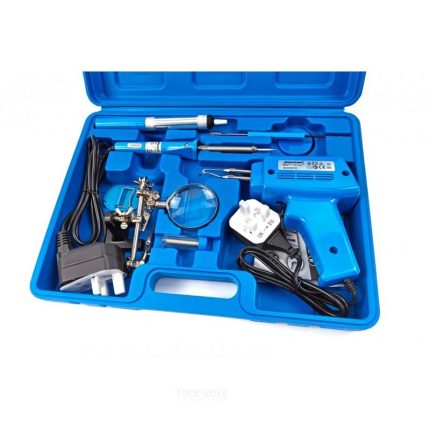
Choosing the right soldering iron can make electrical repairs, electronics work, wiring projects, and DIY tasks considerably easier. When visiting a hardware store Kenya customers can find different soldering irons with varying wattages, tip designs, temperature controls, sizes, and accessories. Understanding these differences before buying helps you choose a tool that matches the work instead of simply selecting the cheapest or highest-powered model.
A soldering iron is designed to heat solder so that it can form an electrical and mechanical connection between suitable conductive components. For electronics, the tool needs to provide enough heat to create a reliable joint without unnecessarily overheating sensitive components or circuit boards. Temperature control, tip selection, wattage, recovery time, ergonomics, and safety features therefore deserve attention when comparing models.
Whether you are an electrician, electronics technician, repair specialist, contractor, student, hobbyist, or homeowner handling occasional repairs, selecting the right soldering iron is an investment in both work quality and productivity.
7 Powerful Reasons to Choose the Right Soldering Iron at a Hardware Store Kenya
The right soldering iron provides appropriate heat, control, precision, and reliability for the intended application. Choosing according to the work rather than price alone can produce better solder joints and reduce unnecessary tool replacement.
A soldering iron that is suitable for small circuit-board repairs may not be appropriate for heavy wires or larger electrical connections.
Likewise, a powerful iron designed for larger joints may be unnecessarily difficult to control when working with delicate electronics.
The most important question is therefore not simply:
“Which soldering iron is the most powerful?”
Instead, ask:
“What type of soldering work will I perform most often?”
That question should guide the rest of the purchasing decision.
What Is a Soldering Iron Used For?
A soldering iron heats solder so it can join suitable electrical components, wires, terminals, or conductive surfaces. Different applications require different levels of heat, precision, and temperature control.
Soldering is commonly used for:
- Electronics repairs
- PCB assembly
- Wire connections
- Electrical repairs
- Circuit prototyping
- Cable work
- Component replacement
- Hobby electronics
- Small appliance repairs
In electronics, soldering creates both the physical connection and the electrical pathway between components.
A good solder joint should be mechanically secure and electrically reliable.
The quality of the soldering iron matters because poor temperature regulation can make it difficult to create consistent joints.
For anyone building a professional tool collection, a soldering iron should be considered alongside other essential electrical supplies.
How Wattage Affects Soldering Iron Performance
Wattage indicates the electrical power available to the heating element; it does not simply mean that a higher-wattage iron operates at a higher temperature. Higher wattage can provide greater thermal recovery when a joint draws heat from the tip.
This is one of the most common misunderstandings when buying soldering irons.
A 60W temperature-controlled iron does not necessarily run hotter than a 30W temperature-controlled model.
Instead, the higher-powered system may have more reserve available when the tip loses heat during soldering.
Recent soldering guidance notes that wattage represents available heating power rather than exact tip temperature, with temperature control and thermal recovery playing important roles in performance.
For example, a small circuit-board joint may require relatively little thermal energy.
A larger connector or thick wire can absorb considerably more heat.
If the soldering iron cannot recover quickly enough, the tip temperature can fall and the solder may stop flowing properly.
This is why wattage should be evaluated together with temperature control and recovery performance.
What Soldering Iron Wattage Should You Choose?
The appropriate wattage depends on the application, with lower-powered tools suitable for light work and higher-powered temperature-controlled models offering greater flexibility for mixed or demanding applications.
As a general guide:
| Soldering Work | Typical Suitable Range |
|---|---|
| Small electronics | 20–40W |
| General electronics | 40–60W |
| Mixed repair work | 50–80W |
| Larger wires and connectors | 60W+ |
| Heavy thermal loads | Higher-power controlled station |
These are practical selection ranges rather than universal rules.
For general electronics, temperature-controlled 60W-class equipment is commonly recommended as a versatile option because it provides useful thermal reserve without necessarily being excessive.
The actual requirement depends on the size of the joint, the material, the tip, the solder, and the amount of heat being absorbed.
Why Temperature Control Matters
Temperature control allows the operator to set and maintain an appropriate tip temperature for different soldering tasks. It provides greater control than a basic uncontrolled iron.
A basic soldering iron may simply heat to its designed operating condition.
A temperature-controlled model allows you to adjust the heat.
This is valuable because different applications have different thermal requirements.
For delicate electronics, excessive heat can damage components, pads, insulation, or circuit-board materials.
At the same time, insufficient heat can create poor solder joints because the solder does not flow properly.
Temperature-controlled irons help address this balance.
Electronics Notes identifies temperature control as one of the important specifications to consider when selecting a soldering iron and explains that controlled irons can maintain the bit temperature more effectively.
Temperature-Controlled vs Basic Soldering Irons
Basic soldering irons can be suitable for simple occasional work, while temperature-controlled irons provide greater flexibility and precision for regular electronics and repair applications.
A basic iron can be attractive because of its lower purchase price.
For occasional simple tasks, it may be adequate.
However, technicians who perform different types of soldering may benefit from adjustable temperature control.
A controlled station can allow the user to adapt the temperature according to:
- Component type
- Solder type
- Joint size
- Tip size
- PCB characteristics
- Heat sensitivity
This makes a temperature-controlled station particularly useful for professional repair environments.
Choosing the Correct Soldering Tip
The soldering tip transfers heat from the iron to the joint, so tip shape and size directly influence precision and heat transfer. Different jobs require different tip geometries.
Common tip shapes include:
- Conical tips
- Chisel tips
- Flat tips
- Bevel tips
- Specialized precision tips
A fine conical tip can be useful for precision work.
A broader chisel tip can transfer heat effectively to larger joints.
The ideal tip should be large enough to transfer heat efficiently while remaining suitable for the joint.
Using an unnecessarily tiny tip on a large connection can make soldering slow because there is insufficient contact area.
Conversely, an oversized tip may make delicate electronics difficult to control.
Interchangeable tips are therefore a valuable feature for professionals working across different applications.
Why Thermal Recovery Is Important
Thermal recovery describes how quickly the soldering iron restores its temperature after heat is transferred into the joint. Good recovery helps maintain consistent soldering performance.
Imagine touching the tip to a large copper connection.
The joint absorbs heat.
The tip temperature can fall.
A good temperature-controlled system detects the change and provides additional heating power to restore the desired temperature.
This is where wattage becomes useful.
A higher-powered controlled iron can have more reserve available for thermal recovery.
Therefore, comparing soldering irons only by maximum temperature can be misleading.
A better evaluation includes:
- Temperature stability
- Heater performance
- Recovery speed
- Tip design
- Available wattage
- Control system
For professional work, recovery can have a noticeable effect on productivity.
Soldering Iron Voltage Matters
Always select a soldering iron designed for the electrical supply available in your working environment. Using an unsuitable voltage can create serious equipment and safety problems.
Before buying a mains-powered soldering iron, check its voltage specification.
The product should be compatible with the electrical supply for the intended location.
Do not assume that every imported tool is automatically suitable.
This is particularly important when buying online or purchasing products intended for another market.
A product designed for a different voltage may require appropriate electrical conversion equipment, and some devices should not be used outside their specified electrical parameters.
Check the manufacturer’s specifications before connecting the tool.
Soldering Stations vs Handheld Irons
A soldering station combines a handpiece with a control unit and is generally useful for technicians who need adjustable temperature, interchangeable tips, and consistent performance.
A simple handheld iron is compact and convenient.
It can be useful for occasional repairs.
A soldering station, however, can provide additional control.
Typical features may include:
- Temperature adjustment
- Digital or analogue display
- Replaceable tips
- Stable stand
- Sponge or brass-wool cleaning system
- Temperature recovery control
- ESD-related protection on suitable models
For a professional electronics repair workshop, a soldering station may be a better long-term investment than repeatedly purchasing basic irons.
ESD Protection for Electronics Work
Electrostatic discharge protection can be important when working with sensitive electronic components because static electricity can damage semiconductor devices even when visible damage is absent.
Not every soldering task requires the same level of ESD protection.
However, technicians repairing modern electronics should consider ESD-safe equipment and appropriate workplace procedures.
This can include:
- ESD-safe soldering equipment
- Grounding arrangements
- ESD work surfaces
- Appropriate wrist straps
- Controlled handling procedures
The soldering iron should be appropriate for the type of electronic work being performed.
For precision electronics repair, ESD protection should be treated as part of the complete workstation rather than as an optional feature.
Soldering Iron Ergonomics
A comfortable soldering iron can improve control during repeated work and help reduce unnecessary hand fatigue. Weight, handle design, cable flexibility, and balance all affect usability.
Professional technicians can spend hours performing detailed soldering.
A tool that is uncomfortable after ten minutes can become frustrating during a full workday.
Look for:
- Comfortable grip
- Balanced handpiece
- Appropriate weight
- Flexible cable
- Heat-resistant handle
- Easy-to-reach controls
The handpiece should remain comfortable while the working tip reaches the required temperature.
Good ergonomics are particularly important for technicians who perform repeated repair work.
The Importance of a Stable Soldering Iron Stand
A proper stand provides a safe place to position a hot soldering iron between joints and reduces the likelihood of accidental contact with the hot tip.
Never place a hot soldering iron directly on a workbench.
A stable stand should hold the tool securely.
It should also be positioned where the operator can return the iron without reaching across cables, components, or other equipment.
A good workstation should keep the hot tool controlled when it is not being actively used.
Some soldering stations include dedicated holders as part of the system.
Soldering Iron Safety at Home and Work
Soldering irons reach temperatures high enough to cause serious burns and ignite unsuitable materials, so safe handling and proper workspace organization are essential.
Keep the following principles in mind:
- Never touch the heated tip.
- Use a proper stand.
- Keep flammable materials away.
- Keep cables organized.
- Work in a suitable ventilated area.
- Wear appropriate eye protection.
- Do not leave a hot iron unattended.
- Unplug the tool when it is no longer required.
- Allow it to cool before storage.
- Keep the tool away from children.
Safety guidance for soldering also recommends ventilation, eye protection, keeping flammable materials away, using the stand, and unplugging the iron when not in use.
The workbench should be organized so that the operator can move the tool safely without catching the power cable or knocking over components.
Soldering Fumes and Ventilation
Soldering should be performed with appropriate ventilation because heating soldering materials and flux can produce fumes that should not be unnecessarily inhaled.
Good ventilation helps remove fumes from the breathing zone.
For regular professional work, a suitable local extraction system may be appropriate.
Avoid positioning your face directly above the soldering point.
A small fan can move air, but it should not simply blow fumes across the operator’s face.
The objective is to control and remove contaminants from the working area.
Selecting Solder for the Job
The soldering iron is only one part of the soldering system; solder type, diameter, flux characteristics, and the materials being joined also affect the final result.
Solder is available in different compositions and diameters.
For electronics, the appropriate solder should be selected according to the application and applicable requirements.
Common considerations include:
- Solder alloy
- Diameter
- Flux core
- Melting characteristics
- Intended application
Lead-free solder can require different thermal conditions from traditional lead-containing solder.
This is another reason why temperature control and thermal recovery are useful.
The solder manufacturer’s specifications should be followed.
Flux and Soldering Quality
Flux helps promote solder wetting and can improve the formation of reliable joints when used appropriately. However, flux residues and cleaning requirements depend on the solder and application.
A poor solder joint can result from several causes.
These include:
- Dirty surfaces
- Insufficient heat
- Excessive heat
- Poor tip condition
- Incorrect solder
- Poor technique
- Contamination
The objective is not simply to make the solder melt.
The solder must properly wet the intended surfaces.
Clean surfaces are therefore important.
How to Choose a Soldering Iron for Electronics
For electronics repair and PCB work, prioritize temperature control, suitable wattage, appropriate tip sizes, thermal recovery, ESD considerations, and ergonomic design.
For a general electronics technician, a temperature-controlled 40–60W or 60W-class station can provide a useful balance of precision and thermal capacity.
For very small components, precision tips and a suitable lower thermal mass can be more important than maximum wattage.
For connectors, thick wires, shielding, and larger thermal masses, additional power reserve can become useful.
Recent guidance similarly identifies controlled 60W-class equipment as a versatile choice for general electronics, with higher power becoming useful for heavier thermal loads.
Choosing a Soldering Iron for Electrical Repairs
Electrical repair work can involve larger conductors and connections than delicate PCB work, so the required power and tip size may be different.
For example, soldering a small electronic component requires precision.
Soldering a larger wire connection may require greater heat transfer.
This means one soldering iron may not be ideal for every electrical application.
The contractor or technician should identify the typical joint sizes before buying.
If the work includes both electronics and larger electrical connections, a versatile temperature-controlled model may provide better value.
For other electrical installation requirements, contractors can also browse electrical products and select components according to their project specifications.
Soldering Iron for DIY Projects
DIY users generally benefit from a straightforward, adjustable soldering iron that is easy to control and supported by essential accessories.
If you are a beginner, avoid buying equipment based solely on the highest wattage.
Instead, look for:
- Adjustable temperature
- Comfortable grip
- Stable stand
- Replaceable tips
- Suitable power rating
- Clear controls
- Basic accessories
A complete kit can be convenient because it may include solder, tips, tweezers, a stand, and other accessories.
However, evaluate the quality of each component rather than assuming every kit offers equal value.
Soldering Iron for Professional Technicians
Professional technicians should prioritize reliability, temperature stability, tip availability, ergonomic design, serviceability, and long-term operating costs.
If soldering is part of your daily work, tool quality becomes more important.
A professional technician may perform hundreds of joints during a working week.
Small differences in heat recovery and ergonomics can therefore have a cumulative impact.
Interchangeable tips are particularly valuable because technicians can use different tip geometries for different tasks.
A reliable temperature-controlled station can also provide greater consistency.
How to Maintain a Soldering Iron
Proper maintenance extends tip life and helps the soldering iron continue transferring heat effectively. Regular inspection and cleaning should form part of normal use.
Important maintenance practices include:
- Keep the tip clean.
- Use the appropriate tip-cleaning method.
- Avoid excessive mechanical force.
- Tin the tip appropriately.
- Replace damaged tips.
- Keep ventilation openings clear.
- Inspect the power cable.
- Check the plug and connections.
- Store the tool safely.
The tip is one of the most important consumable components.
If it becomes heavily oxidized, damaged, or contaminated, soldering performance can decline.
How to Protect Soldering Tips
Correct tip care helps maintain heat transfer and can extend the useful life of the tip. Avoid unnecessary abrasion and excessive temperatures.
Do not scrape modern soldering tips aggressively with abrasive materials unless the manufacturer specifically recommends the method.
Use the cleaning system recommended for the tip.
Keep an appropriate coating of solder on the working surface when required.
Avoid leaving the iron at unnecessarily high temperatures for long periods.
When a tool is not being used for an extended period, use its sleep or standby function if available.
Common Soldering Iron Buying Mistakes
Many soldering problems begin with purchasing decisions that focus on one specification while ignoring the overall application.
Common mistakes include:
Buying only by wattage
A higher wattage does not automatically mean better performance.
Ignoring temperature control
For varied electronics work, fixed-temperature equipment can be limiting.
Choosing the wrong tip
Tip geometry directly affects heat transfer and precision.
Ignoring voltage
An unsuitable mains rating can create equipment and safety problems.
Buying a tool without replacement tips
A soldering iron becomes less useful if compatible tips are difficult to obtain.
Ignoring ergonomics
An uncomfortable tool can become problematic during long work sessions.
Choosing the cheapest option
Low initial cost does not necessarily mean low total cost.
Why Quality Tools Are a Better Investment
A quality soldering iron can provide more consistent performance, better control, and greater durability, making it a practical investment for people who solder regularly.
The cheapest iron may appear attractive at first.
But consider the long-term requirements.
You may eventually need:
- Replacement tips
- Better temperature control
- Faster recovery
- A stronger stand
- Better ergonomics
- More reliable heating
If the first tool cannot meet these requirements, you may end up buying another one.
Selecting an appropriate tool from the beginning can therefore be more economical.
Buying Soldering Tools From a Hardware Store Kenya
When purchasing soldering equipment from a hardware store Kenya, compare the tool’s specifications with your actual application and ask about compatible tips, accessories, and maintenance requirements.
Before making the purchase, consider the following checklist:
| Feature | What to Check |
|---|---|
| Wattage | Is it appropriate for your work? |
| Temperature | Is it adjustable? |
| Recovery | Does it maintain heat under load? |
| Tips | Are replacements available? |
| Voltage | Is it suitable for your power supply? |
| Handle | Is it comfortable and balanced? |
| Stand | Is it stable and heat-resistant? |
| Safety | Does it have suitable protective features? |
| ESD | Is it appropriate for sensitive electronics? |
| Accessories | Does the kit contain useful essentials? |
This approach helps you compare tools based on actual usefulness rather than appearance.
Soldering Tools and Your Wider Hardware Kit
A soldering iron is often only one part of a technician’s wider tool collection, so it makes sense to consider complementary tools and accessories when planning your purchase.
Depending on the work, you may also need:
- Screwdrivers
- Pliers
- Wire cutters
- Wire strippers
- Multimeters
- Tweezers
- Heat-shrink tubing
- Solder
- Flux
- Desoldering braid
- Replacement tips
For broader repair and installation projects, Ngong Hills Merchants also provides power tools and drill bits.
For fastening and assembly tasks, contractors can browse bolts and nuts.
Final Thoughts
Choosing the right soldering iron is about matching wattage, temperature control, tip design, recovery performance, safety, and ergonomics to the work you actually perform.
A beginner doing occasional repairs may only need a straightforward adjustable iron.
An electronics technician may benefit from a temperature-controlled station with interchangeable tips and appropriate ESD protection.
A contractor working with larger electrical connections may need more thermal capacity.
The key is to select the tool according to the application.
When visiting a hardware store Kenya, do not ask only for the most powerful soldering iron. Explain what you intend to solder, how frequently you will use the tool, and whether you are working on delicate electronics, wires, connectors, or larger electrical components.
For general electronics, controlled 60W-class equipment is a practical reference point, although smaller or larger tools may be appropriate depending on the thermal load. Wattage should be viewed as available heating capacity rather than simply maximum operating temperature.
Also consider the less obvious features.
A comfortable handle can improve control.
A stable stand can improve safety.
Replaceable tips can extend the usefulness of the tool.
Temperature control can make different jobs easier.
Good thermal recovery can improve productivity.
And appropriate ventilation and safe handling can reduce unnecessary risks.
Ultimately, the best soldering iron is not necessarily the cheapest, the smallest, or the highest-powered model.
It is the one that gives you the appropriate combination of heat, control, precision, reliability, and safety for your specific work.
Your One-Stop Hardware Partner in Ngong
Imagine completing your project with the right tools, the best materials, and expert advice. At Ngong Hills Merchants, we turn your DIY or construction vision into reality with a complete selection of plumbing, electrical, glass, and sanitary ware.
Contact our team for a consultation and get the right supplies, right now.
QUALITY HARDWARE & SUPPLIES IN NGONG ✔ Complete Range of Plumbing & Electrical ✔ Power Tools, Adhesives & Paints ✔ Glass, Framing & Sanitary Ware ✔ Serving Ngong, Karen, Matasia, Kiserian & beyond.
Request Your Free Consultation: Ngong Hills Merchants
Email: ngonghillsmerchants [at] gmail.com
Phone: +254 715974811
Visit Us: Ngong Township, Ngong, Kenya
Website: https://ngonghillsmerchants.com/