
Plywood vs MDF vs Blockboard Differences: Grades, Uses and the Right Choice
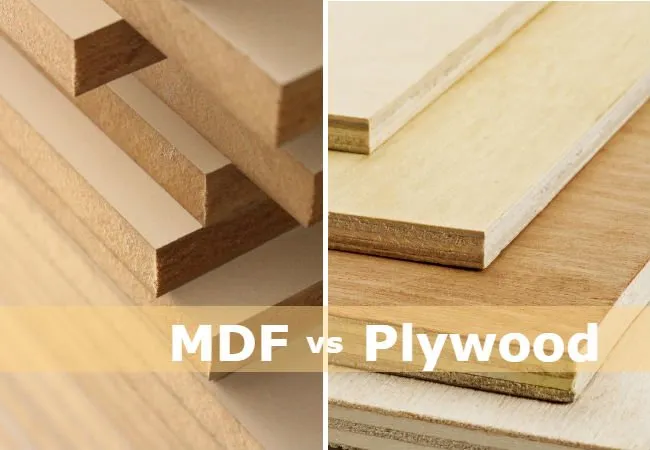
Plywood vs MDF Kenya is an important comparison for anyone buying boards for furniture, cabinetry, doors, partitions, shelving or interior joinery because each material has different strengths, limitations and ideal applications.
Plywood, MDF and blockboard are all engineered wood products, but they are manufactured differently and therefore behave differently when cut, screwed, painted, exposed to moisture or used for structural purposes.
Choosing the cheapest sheet can sometimes result in higher costs later. A board that performs well in a dry bedroom may not be appropriate for a kitchen, bathroom or exterior application. Likewise, a premium moisture-resistant board may be unnecessary for a simple indoor cabinet.
The right decision depends on the job.
This guide explains the main differences between plywood, MDF and blockboard, how board grades affect performance, where marine plywood belongs, how moisture resistance works, and what to consider when comparing cost and long-term value in Kenya.
Plywood vs MDF Kenya: What Is the Difference?
Plywood is manufactured from layers of wood veneer bonded together, MDF is produced from refined wood fibres and resin, while blockboard has a core made from strips of solid wood covered with veneer faces.
The manufacturing process gives each board different characteristics.
Plywood
Plywood consists of multiple thin wood layers, or veneers, arranged with their grain directions generally alternating.
This cross-layer construction provides good dimensional stability and strength.
MDF
MDF, or medium-density fibreboard, is manufactured by breaking wood into fibres and combining those fibres with resin under heat and pressure.
The result is a smooth and relatively uniform board.
Blockboard
Blockboard generally consists of strips of wood arranged as a core between veneer or other face layers.
It combines characteristics of solid timber and panel products.
Understanding these differences makes it easier to select the right board.
Plywood vs MDF Kenya: Why Board Grades Matter
Board grade is important because not all plywood, MDF or blockboard is manufactured for the same environment or application.
When buying boards, do not assume that every sheet with the same nominal thickness has identical performance.
Grades and specifications can relate to:
- Strength.
- Face quality.
- Core quality.
- Moisture resistance.
- Bonding quality.
- Surface finish.
- Intended application.
For plywood, buyers may encounter descriptions such as:
- General-purpose plywood.
- Commercial plywood.
- Marine plywood.
- Structural plywood.
- Exterior plywood.
The exact classification and performance should be confirmed from the manufacturer’s specification.
For MDF, products may include standard interior MDF and moisture-resistant variants.
Blockboard can also vary in quality depending on the core material, bonding and face veneers.
Plywood vs MDF Kenya: Plywood Explained
Plywood is a versatile panel product valued for its strength, dimensional stability and ability to handle applications where MDF may not be the preferred material.
Its cross-laminated construction helps distribute loads across the sheet.
Plywood can be used for:
- Furniture.
- Cabinets.
- Doors.
- Wall panelling.
- Partitions.
- Shelving.
- Roof and construction applications where appropriately specified.
- Workshop projects.
The exact application depends on the plywood grade.
A thin decorative plywood sheet should not automatically be treated as structural plywood.
Similarly, interior plywood should not automatically be used in a wet environment.
Plywood Grades Kenya: What Should You Check?
Plywood grades Kenya buyers encounter can differ significantly, so the face appearance, core construction, bonding and intended environment should be confirmed before purchase.
Important questions include:
- What is the plywood grade?
- What thickness is required?
- Is it intended for interior or exterior use?
- Is it moisture resistant?
- Is the core free from major voids?
- What is the face veneer quality?
- Is it structural?
- What adhesive system has been used?
The word “plywood” by itself does not provide enough information.
A good supplier should be able to explain the intended application of the sheet being sold.
Marine Plywood Kenya: What Makes It Different?
Marine plywood Kenya buyers should understand that marine plywood is designed for demanding moisture-exposure applications and is not simply ordinary plywood with a premium name.
Marine plywood is manufactured using appropriate veneers and durable bonding systems intended to withstand severe moisture exposure.
However, “marine” does not mean the sheet can remain permanently exposed to water without protection.
Correct installation and sealing remain important.
Marine plywood can be considered for applications such as:
- Boat construction.
- High-moisture environments.
- Outdoor joinery.
- Certain demanding furniture applications.
- Construction situations where enhanced moisture resistance is specified.
Always verify the manufacturer’s certification and specification rather than relying solely on the seller’s description.
Plywood vs MDF Kenya: MDF Explained
MDF is a smooth, uniform engineered board that is particularly useful for painted furniture, cabinetry, shelving, panelling and interior joinery.
Because MDF is made from fine wood fibres, it has a relatively consistent surface.
This makes it useful for:
- Painted cabinets.
- Wardrobes.
- Shelving.
- Decorative wall panels.
- Interior doors.
- Furniture.
- Office fittings.
MDF is especially popular when a smooth painted finish is required.
It can be routed and machined into decorative profiles more easily than many plywood products.
However, standard MDF is generally intended for dry interior environments.
MDF Board Kenya: Advantages
MDF board Kenya buyers often choose MDF because it offers a smooth surface, consistent thickness and relatively easy machining for interior applications.
Advantages can include:
Smooth surface
MDF is suitable for painting when properly prepared.
Consistency
Its uniform structure makes it predictable for many cutting and routing operations.
Good decorative potential
It can be shaped into profiles and detailed designs.
Suitable for cabinetry
MDF works well for many interior cabinet and wardrobe applications.
Efficient use of material
Its uniform structure can reduce some of the inconsistencies associated with natural timber.
However, MDF also has limitations.
Plywood vs MDF Kenya: MDF Moisture Limitations
Standard MDF should generally be protected from prolonged moisture because water can cause swelling, edge damage and deterioration.
This is particularly important around:
- Sinks.
- Bathrooms.
- Wet floors.
- Outdoor areas.
- Poorly ventilated kitchens.
- Leaking plumbing.
Once moisture penetrates an unprotected MDF edge, the material can swell.
This is why kitchen and bathroom joinery requires careful board selection and edge protection.
Moisture-resistant MDF may be more appropriate in certain interior environments, but it should still be installed according to the manufacturer’s specifications.
Plywood vs MDF Kenya: Blockboard Explained
Blockboard consists of a core made from strips of wood between veneer layers and can be useful where a lightweight, stable and relatively strong panel is required.
Blockboard is commonly considered for:
- Doors.
- Tables.
- Shelving.
- Partitions.
- Furniture.
- Long panels.
Its construction differs from both plywood and MDF.
The wood-strip core can provide useful stiffness, particularly in longer components.
However, the quality of blockboard varies considerably.
Check:
- Core construction.
- Strip quality.
- Adhesive bonding.
- Face veneer.
- Thickness.
- Flatness.
- Moisture resistance.
Blockboard Grades: What Determines Quality?
Blockboard grades depend on factors such as the quality of the timber core, bonding, face veneers, thickness and intended application.
A high-quality blockboard should have a reasonably consistent core.
Poor-quality boards may contain:
- Large gaps.
- Uneven strips.
- Weak bonding.
- Voids.
- Poor-quality faces.
- Excessive warping.
These defects can become particularly obvious when the board is cut.
Always inspect the sheet edges where possible.
Plywood vs MDF Kenya: Strength Comparison
Plywood is generally the stronger choice for many applications requiring panel strength, while MDF is valued more for surface consistency and machining.
Plywood’s layered construction provides useful strength characteristics.
MDF has a homogeneous structure but behaves differently when fasteners are inserted near edges.
Blockboard can also provide good stiffness for certain furniture and door applications.
The correct choice depends on:
- Span.
- Thickness.
- Support spacing.
- Load.
- Fastener type.
- Application.
For structural applications, use a board specifically specified for that purpose rather than choosing based on general strength assumptions.
Plywood vs MDF Kenya: Screw Holding
Plywood generally provides good screw-holding performance, while MDF requires more careful edge fixing and appropriate fasteners to reduce splitting or pull-out.
MDF can hold screws effectively when correctly installed.
However, fastening close to edges requires care.
Best practices include:
- Pre-drilling where appropriate.
- Using suitable screws.
- Maintaining adequate edge distance.
- Avoiding excessive tightening.
- Supporting the board correctly.
For heavy furniture, the joint design is more important than simply choosing a board.
Plywood vs MDF Kenya: Cutting and Machining
MDF offers a very uniform material for cutting and routing, while plywood provides strength and a natural layered appearance that may be desirable in certain designs.
MDF is popular for:
- CNC cutting.
- Decorative routing.
- Cabinet components.
- Painted furniture.
Plywood can also be machined effectively but may expose different veneer layers at cut edges.
Blockboard may require more attention when cutting because the wood-strip core can produce different edge characteristics.
Good cutting tools make a significant difference.
For project equipment, you can explore our power tools and browse our drill bits.
Plywood vs MDF Kenya: Which Is Better for Cabinets?
For painted interior cabinets, MDF can provide an excellent smooth finish, while plywood may be preferable where strength, lower weight or improved moisture tolerance is required.
Consider the location.
Bedroom wardrobes
MDF can be a practical option.
Living-room cabinets
Both MDF and plywood can work well.
Kitchen cabinets
Plywood or moisture-resistant board may be preferable depending on the design and exposure.
Bathroom cabinets
Moisture-resistant materials should be considered, together with proper sealing.
The cabinet’s construction details are just as important as the board itself.
Plywood vs MDF Kenya: Which Is Better for Kitchen Cabinets?
Kitchen cabinets require careful consideration of moisture, fastener holding, weight and durability, making plywood and moisture-resistant MDF possible choices depending on the cabinet design.
Kitchen environments can expose boards to:
- Steam.
- Water splashes.
- Cleaning chemicals.
- Heat.
- Food spills.
The sink cabinet is particularly vulnerable.
A standard interior MDF board may therefore be a poor choice if water can repeatedly reach its edges.
Plywood can provide an advantage in some kitchen applications, particularly where the cabinet must withstand more demanding conditions.
However, proper sealing and installation remain essential.
Plywood vs MDF Kenya: Which Is Better for Bathroom Furniture?
For bathroom furniture, moisture resistance should be a primary consideration, and standard MDF should not be treated as waterproof simply because it has been painted.
Bathroom furniture can include:
- Vanity units.
- Shelves.
- Storage cabinets.
- Mirror cabinets.
Moisture-resistant MDF can be appropriate for some bathroom interiors if properly installed.
Plywood with an appropriate moisture-resistant specification may also be suitable.
The critical areas include:
- Board edges.
- Screw holes.
- Joints.
- Sink cut-outs.
- Floor contact.
These areas should receive appropriate protection.
Plywood vs MDF Kenya: Which Is Better for Doors?
Plywood and blockboard can both be suitable for doors, while the best option depends on door construction, thickness, weight, finish and environmental exposure.
Blockboard is commonly considered for certain internal doors because of its relatively lightweight construction and stiffness.
Plywood can also be used where strength and dimensional stability are required.
MDF can be used in interior door construction and decorative applications, especially where a smooth painted finish is desired.
For exterior doors, moisture exposure becomes a much more important consideration.
Blockboard vs Plywood: Which Is Stronger?
Blockboard and plywood have different construction characteristics, so neither should automatically be labelled stronger for every application.
Plywood uses multiple veneer layers.
Blockboard uses a strip-wood core.
Performance depends on:
- Thickness.
- Core quality.
- Veneer quality.
- Adhesive.
- Span.
- Loading direction.
- Support.
- Construction method.
A high-quality board of one type can outperform a poor-quality board of another type.
This is why specifications are more useful than product names alone.
Plywood vs MDF Kenya: Weight Comparison
MDF can be relatively heavy for its size, while plywood and blockboard may offer different weight-to-strength characteristics depending on their construction and density.
Weight matters when designing:
- Wall cabinets.
- Large doors.
- Shelves.
- Office furniture.
- Movable furniture.
Heavy boards can increase:
- Installation difficulty.
- Hinge requirements.
- Wall loading.
- Transport costs.
- Labour requirements.
Before selecting a thick board, consider whether the additional weight provides a meaningful performance benefit.
Plywood vs MDF Kenya: Surface Finish
MDF is particularly attractive when a completely smooth painted surface is required, while plywood and blockboard can provide natural wood character or accept veneers and laminates.
MDF’s fine surface is well suited to:
- Enamel paint.
- Spray finishes.
- Laminates.
- Veneers.
- Decorative routing.
Plywood can be selected when visible wood grain is part of the design.
Blockboard may also be veneered or laminated.
The final appearance depends on preparation.
Poor sanding can ruin even an expensive board.
Plywood vs MDF Kenya: Painting Boards
MDF is often convenient for painting, but proper edge sealing, priming and sanding are essential for an even finish.
MDF edges are more absorbent than its smooth face.
If the edges are not properly prepared, they can absorb excessive coating and appear different from the board surface.
A good process can include:
- Sanding.
- Edge preparation.
- Primer.
- Drying.
- Light sanding.
- Final coats.
For suitable project finishing materials, you can browse our paints.
Plywood vs MDF Kenya: Laminating and Veneering
Plywood, MDF and blockboard can all be finished with veneers or decorative laminates, but the appropriate adhesive and preparation depend on the board surface and application.
Before applying a laminate or veneer:
- Ensure the board is clean.
- Confirm it is flat.
- Use an appropriate adhesive.
- Apply uniform pressure.
- Allow sufficient curing time.
- Finish exposed edges correctly.
For suitable project adhesives, you can discover our range of adhesives.
Plywood vs MDF Kenya: Cost Per Sheet
The cost per sheet varies according to thickness, dimensions, grade, manufacturer, face quality, moisture resistance and market conditions, so price should be compared against actual specifications.
When comparing prices, make sure you are comparing equivalent products.
For example:
18 mm standard MDF vs 18 mm marine plywood
is not an apples-to-apples comparison.
The materials have different:
- Manufacturing processes.
- Moisture performance.
- Structural properties.
- Surface characteristics.
- Applications.
A better calculation is:
Cost per usable square metre = sheet price ÷ usable sheet area
Then consider wastage.
A cheaper board that produces excessive waste may not be the cheaper option overall.
Plywood vs MDF Kenya: Reducing Board Waste
Careful cutting plans can reduce waste and lower the effective cost of plywood, MDF and blockboard projects.
Before purchasing sheets:
- List all required components.
- Record each component’s dimensions.
- Account for saw kerf.
- Plan grain direction where relevant.
- Arrange components efficiently.
- Allow for defective sections where applicable.
- Calculate the number of full sheets required.
For furniture production, a cutting plan can significantly improve material efficiency.
Plywood vs MDF Kenya: Storage
All engineered boards should be stored flat, dry and protected from unnecessary moisture to reduce warping and damage before installation.
Good storage practice includes:
- Keep sheets off the floor.
- Store them on level supports.
- Avoid direct exposure to rain.
- Protect edges from impact.
- Avoid leaning large sheets for extended periods.
- Maintain suitable ventilation.
Moisture exposure before installation can affect board performance.
Plywood vs MDF Kenya: Edge Protection
Edge protection is especially important for boards exposed to moisture because water commonly enters through cut edges, holes and joints.
Pay particular attention to:
- Sink cut-outs.
- Screw holes.
- Door edges.
- Cabinet bottoms.
- Floor-level edges.
- Exposed shelf edges.
Depending on the board and application, protection can include:
- Paint.
- Sealers.
- Edge bands.
- Laminate.
- Appropriate waterproofing details.
The manufacturer’s instructions should determine the correct system.
Plywood vs MDF Kenya: Common Buying Mistakes
Many board failures result from choosing the wrong grade or application rather than from the board material itself.
Common mistakes include:
Buying by thickness only
Two 18 mm boards can have completely different performance.
Using standard MDF in wet areas
Moisture can cause serious damage.
Assuming marine plywood is waterproof
Marine plywood is moisture-resistant for demanding applications but still requires appropriate design and protection.
Ignoring board quality
Low-quality cores can create weak points.
Choosing by price alone
The cheapest sheet may have higher lifecycle costs.
Failing to inspect edges
Core voids and poor bonding may become apparent along cut edges.
Plywood vs MDF Kenya: A Simple Decision Guide
Use MDF when smooth painted finishes and easy interior machining are priorities; choose plywood when strength, dimensional stability or demanding applications matter; and consider blockboard where a stiff, relatively lightweight panel suits the design.
Choose MDF for:
- Painted wardrobes.
- Interior cabinets.
- Decorative panels.
- Shelving.
- Office furniture.
- Routed designs.
Choose plywood for:
- Strong cabinetry.
- Furniture.
- Demanding joinery.
- Certain construction applications.
- Moisture-exposed applications when correctly specified.
Choose blockboard for:
- Doors.
- Tables.
- Long shelves.
- Furniture.
- Interior partitions.
These are general recommendations and should always be adjusted according to the manufacturer’s specification and project requirements.
Plywood vs MDF Kenya: Frequently Asked Questions
Is plywood better than MDF?
Neither is universally better. Plywood generally offers advantages in strength and dimensional stability, while MDF offers a smooth, uniform surface and excellent machining characteristics for many interior applications.
Is MDF cheaper than plywood?
MDF can be more economical for some interior applications, but prices vary according to thickness, grade, manufacturer and market conditions.
What is the best board for kitchen cabinets?
Plywood and moisture-resistant MDF can both be suitable. The choice depends on cabinet design, exposure, finish and budget.
Is marine plywood waterproof?
Marine plywood is designed for demanding moisture exposure, but it should not be interpreted as completely immune to water. Correct sealing, construction and maintenance remain important.
What is blockboard used for?
Blockboard can be used for doors, furniture, shelving, tables, partitions and other applications where its stiffness and construction are suitable.
Which is stronger, blockboard or MDF?
Performance depends on board quality, thickness, construction and application. Blockboard can have useful stiffness, while MDF has a uniform structure. Neither should be selected solely on a generic strength assumption.
Can MDF be used in bathrooms?
Moisture-resistant MDF may be suitable for certain bathroom applications when properly installed and protected. Standard MDF should not be exposed to prolonged moisture.
Can plywood be used outside?
Only plywood specified for the intended exterior or moisture-exposed application should be considered. Ordinary interior plywood should not automatically be used outdoors.
Which board is best for wardrobes?
MDF is often suitable for painted wardrobes, while plywood can be preferable when additional strength or moisture tolerance is required.
Which board is best for furniture?
Plywood, MDF and blockboard can all be used for furniture. The appropriate choice depends on the furniture design, finish, strength requirements and budget.
How thick should plywood be for furniture?
There is no universal thickness. It depends on the span, load, support spacing and furniture design.
How should plywood and MDF be stored?
Store sheets flat on level supports in a dry, protected environment and keep them away from direct ground contact and unnecessary moisture.
Plywood vs MDF Kenya: Make the Right Board Choice
Plywood vs MDF Kenya is not simply a competition to find one winning material; it is about matching the board’s characteristics to the application’s actual requirements.
Plywood is a strong and versatile panel product with applications ranging from furniture and cabinetry to demanding construction work when the correct grade is selected.
MDF is an excellent option for many interior projects where a smooth, consistent surface and easy machining are important.
Blockboard occupies another useful position, particularly for doors, furniture and longer panels where its core construction can provide useful stiffness.
The key is to buy according to grade, specification and application, not just the name printed on the sheet.
Before buying, consider:
- Intended use.
- Board thickness.
- Grade.
- Moisture exposure.
- Strength requirements.
- Surface finish.
- Core quality.
- Fastener requirements.
- Expected service life.
- Total project cost.
For specialist applications, ask for the manufacturer’s technical information and confirm that the product meets the required specification.
When you make the right board choice at the beginning, you reduce waste, avoid premature replacement and achieve a better-quality finished project.
Your One-Stop Hardware Partner in Ngong
Imagine completing your project with the right tools, the best materials, and expert advice. At Ngong Hills Merchants, we turn your DIY or construction vision into reality with a complete selection of plumbing, electrical, glass, and sanitary ware.
Contact our team for a consultation and get the right supplies, right now.
QUALITY HARDWARE & SUPPLIES IN NGONG ✔ Complete Range of Plumbing & Electrical ✔ Power Tools, Adhesives & Paints ✔ Glass, Framing & Sanitary Ware ✔ Serving Ngong, Karen, Matasia, Kiserian & beyond.
Request Your Free Consultation: Ngong Hills Merchants
Email: ngonghillsmerchants [at] gmail.com
Phone: +254 715974811
Visit Us: Ngong Township, Ngong, Kenya
Website: https://ngonghillsmerchants.com/