
Steel Quantities: Y-Bar Weights, Lengths and Lapping
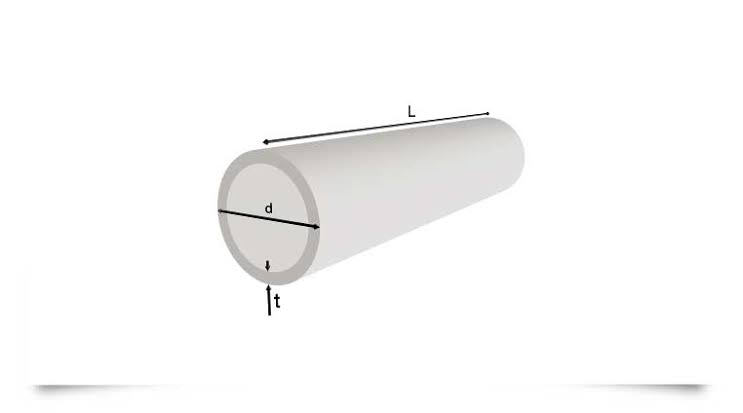
Knowing the Y bar weight per metre Kenya contractors and homeowners should use is essential when estimating reinforcement steel for slabs, beams, columns and other reinforced-concrete work. Steel is one of the major material costs in a concrete structure, so an accurate quantity calculation can make a significant difference to the project budget.
Y-bars are commonly identified by their nominal diameter, such as Y8, Y10, Y12, Y16 or Y20. The diameter determines the approximate mass per metre, while the required number and length of bars depends on the structural drawings, spacing and dimensions of the reinforced element.
For example, a 12 mm reinforcement bar weighs approximately 0.89 kg per metre, while a 16 mm bar weighs approximately 1.58 kg per metre. A standard 12 m length of D12 therefore weighs approximately 10.66 kg, while a 12 m D16 weighs approximately 18.95 kg.
These figures are useful for estimating, but they should not be used to determine structural reinforcement requirements. The bar diameter, spacing, number of bars, lap arrangement and anchorage should come from the structural drawings prepared for the project.
This guide explains Y bar weight per metre Kenya builders can use for quantity calculations, how to convert lengths into kilograms and tonnes, how standard bar lengths affect ordering, and how lap allowances influence the total amount of steel required.
Y Bar Weight Per Metre Kenya: What Does It Mean?
Y bar weight per metre Kenya calculations use the nominal diameter of the reinforcement bar to determine its approximate mass for every metre of length. The larger the diameter, the greater the weight per metre and the higher the cost of a given length of reinforcement.
A reinforcement bar’s weight can be estimated using the standard formula:
Weight per metre = D² ÷ 162
where D is the nominal bar diameter in millimetres.
For example, for a 12 mm bar:
12² ÷ 162
144 ÷ 162 = 0.889 kg/m
Therefore, a D12 reinforcement bar weighs approximately:
0.89 kg per metre
For D16:
16² ÷ 162 = 1.580 kg/m
Therefore:
D16 ≈ 1.58 kg/m
This formula provides a convenient way to calculate the approximate weight of reinforcement bars without having to memorise every size.
The theoretical weight can differ slightly from the actual delivered weight because manufacturing tolerances and product specifications can affect the mass of individual bars.
Y Bar Weight Chart in Kilograms Per Metre
A reinforcement bar weight chart allows you to estimate steel quantities quickly by matching the nominal diameter to its approximate weight per metre. The figures below are theoretical values calculated using D² ÷ 162.
| Bar Diameter | Approx. Weight per Metre | Approx. Weight of 12 m Bar |
|---|---|---|
| Y6 / D6 | 0.222 kg/m | 2.67 kg |
| Y8 / D8 | 0.395 kg/m | 4.74 kg |
| Y10 / D10 | 0.617 kg/m | 7.41 kg |
| Y12 / D12 | 0.889 kg/m | 10.67 kg |
| Y16 / D16 | 1.580 kg/m | 18.96 kg |
| Y20 / D20 | 2.469 kg/m | 29.63 kg |
| Y25 / D25 | 3.858 kg/m | 46.30 kg |
| Y28 / D28 | 4.840 kg/m | 58.08 kg |
| Y32 / D32 | 6.321 kg/m | 75.85 kg |
| Y40 / D40 | 9.877 kg/m | 118.52 kg |
These are theoretical calculations based on nominal diameter.
For procurement, use the supplier’s actual product specification and the structural drawings.
How Is Y Bar Weight Per Metre Calculated?
The standard formula for estimating reinforcement weight is D² ÷ 162, where D is the bar diameter in millimetres. This formula is particularly useful when converting a bar schedule from lengths into kilograms or tonnes.
For a D16 bar:
16 × 16 = 256
Then:
256 ÷ 162 = 1.580 kg/m
If you have 100 metres of D16:
100 × 1.580 = 158 kg
Therefore, 100 metres of D16 reinforcement weighs approximately 158 kg.
For 500 metres:
500 × 1.580 = 790 kg
For 1,000 metres:
1,000 × 1.580 = 1,580 kg
Therefore:
1,000 metres of D16 ≈ 1.58 tonnes
This method is useful when comparing a bar schedule with a supplier quotation.
D12 D16 Weight: What Is the Difference?
D12 and D16 are substantially different in weight even though the diameter difference is only 4 mm. D12 weighs about 0.89 kg/m, while D16 weighs about 1.58 kg/m, making D16 approximately 78% heavier per metre.
The calculation for D12 is:
12² ÷ 162 = 0.889 kg/m
The calculation for D16 is:
16² ÷ 162 = 1.580 kg/m
For a 12 m bar:
D12 ≈ 10.67 kg
D16 ≈ 18.96 kg
The difference per bar is therefore approximately:
18.96 − 10.67 = 8.29 kg
If a project requires hundreds of bars, that difference becomes significant.
However, D12 and D16 cannot simply be substituted for one another because reinforcement diameter and spacing are structural design decisions.
Never replace a specified D16 bar with D12 simply because it is cheaper without approval from the responsible structural professional.
How Many Metres Are in a Standard Y-Bar?
Reinforcement bars are commonly supplied in long straight lengths, with 12 m being a widely used commercial length. However, actual available lengths can vary by supplier, manufacturer and market conditions.
For estimating purposes, a 12 m bar is often used.
Therefore:
10 bars × 12 m = 120 m
If those bars are D12:
120 × 0.889 = 106.68 kg
If they are D16:
120 × 1.580 = 189.60 kg
This demonstrates why both length and diameter must be recorded when preparing a steel quantity schedule.
Simply saying “100 bars of steel” is incomplete.
A useful order description should identify:
- Diameter
- Number of bars
- Nominal length
- Total calculated length
- Estimated weight
How Do You Calculate Steel Quantity for a Slab?
Steel quantity slab calculations should begin with the structural bar schedule, including bar diameter, spacing, number, shape and required length. The total bar lengths can then be converted into weight using the appropriate weight-per-metre formula.
Suppose a drawing specifies D12 bars at 200 mm centres in one direction across a slab.
The number of bars depends on the dimension over which the spacing is measured.
For a simplified example, assume bars are distributed over a 5 m width.
At 200 mm centres:
5 ÷ 0.20 = 25 spaces
Depending on the detailing convention and whether both end bars are included, the actual number of bars will normally be established from the bar schedule or drawing.
This is important because simply dividing the dimension by the spacing may not give the final number of bars.
If the schedule ultimately calls for 26 bars, and each bar has an estimated cutting length of 10 m:
26 × 10 = 260 m
For D12:
260 × 0.889 = 231.14 kg
Therefore, the estimated steel mass is approximately:
231 kg
This is a simplified example. Actual cutting lengths must account for bends, hooks, anchorage, cover and laps where specified.
How Do You Calculate Steel Weight From Total Length?
Once the total length of a particular reinforcement diameter is known, multiply that length by the theoretical weight per metre. This is one of the quickest methods of converting a bar schedule into kilograms.
The formula is:
Total steel weight = Total bar length × Weight per metre
For D12:
Weight per metre = 0.889 kg
If total D12 length is 1,000 m:
1,000 × 0.889 = 889 kg
Therefore:
1,000 m D12 ≈ 889 kg
For D16:
1,000 × 1.580 = 1,580 kg
Therefore:
1,000 m D16 ≈ 1.58 tonnes
The same approach works for every nominal diameter.
How Many D12 Bars Make One Tonne?
The theoretical number of 12 m D12 bars required to reach one tonne is approximately 94 bars, because each 12 m D12 weighs about 10.67 kg. Actual purchasing should be based on the supplier’s stated bar weight and the project bar schedule.
Calculate the weight of one 12 m D12:
12 × 0.889 = 10.668 kg
Then:
1,000 ÷ 10.668 ≈ 93.74 bars
Therefore, approximately 94 full 12 m bars would weigh around one tonne.
This is useful when converting between supplier quotations given in tonnes and project requirements given in numbers of bars.
For example, if a supplier quotes D12 at a price per tonne, the approximate number of 12 m bars represented by that tonne can help you understand the quotation.
How Many D16 Bars Make One Tonne?
A 12 m D16 bar weighs approximately 18.96 kg, so roughly 53 full bars are required to reach one tonne. The exact number and delivered mass will depend on actual bar weights and manufacturing tolerances.
Calculation:
12 × 1.580 = 18.96 kg
Then:
1,000 ÷ 18.96 ≈ 52.74
Therefore, approximately 53 full 12 m D16 bars represent about one tonne.
The difference between D12 and D16 illustrates how rapidly steel weight increases with diameter.
This is because the formula uses the square of the diameter.
A small increase in diameter can therefore create a substantial increase in mass.
Why Does Bar Diameter Have Such a Large Effect on Weight?
Reinforcement weight increases approximately with the square of the bar diameter, which means doubling the diameter produces roughly four times the theoretical weight per metre. This is why accurate diameter identification is critical when estimating steel costs.
Compare D12 and D24.
D12:
12² ÷ 162 = 0.889 kg/m
D24:
24² ÷ 162 = 3.556 kg/m
D24 has twice the diameter of D12 but approximately four times the theoretical mass per metre.
This relationship explains why steel estimates can change dramatically when reinforcement diameter changes.
It also explains why using the wrong bar size in a quantity calculation can result in a significant cost error.
What Is Lapping in Reinforcement Steel?
Lapping is the intentional overlap of two reinforcement bars so that force can be transferred effectively from one bar to another. Lap lengths should be determined by the structural design and applicable reinforcement detailing requirements rather than by an arbitrary percentage of bar length.
Long reinforcement members cannot always be installed as a single continuous bar.
Where a longer run is required than the available bar length, two bars may overlap.
For example, a structural drawing might specify a particular lap length for D12 reinforcement.
If a bar needs to continue beyond the end of a 12 m stock length, the next bar overlaps the first by the specified amount.
This creates additional steel consumption.
For quantity estimating, laps therefore need to be included in the total reinforcement length.
However, the lap length is not automatically the same for every bar.
It can depend on:
- Bar diameter
- Concrete strength
- Steel grade
- Position of the bar
- Type of stress
- Anchorage conditions
- Detailing requirements
- Applicable design standard
How Do Lap Lengths Affect Steel Quantity?
Lap allowances can increase the total steel length beyond the simple physical dimensions of the slab or beam. If laps are ignored during quantity take-off, the project may order less reinforcement than the detailed design actually requires.
Consider a simplified example.
Suppose a reinforcement run requires:
20 m
and the available bars are:
12 m each
Two 12 m bars provide:
24 m
But if a 4 m lap is required, the effective continuous length becomes:
12 + 12 − 4 = 20 m
The project therefore needs two complete stock bars to achieve the required 20 m run.
The 4 m overlap is not “free” steel.
It is part of the material quantity.
This is why reinforcement quantity calculations must account for laps and cutting.
The actual lap length should always come from the structural detailing.
Is There a Universal Lap Length for D12 or D16?
No. There is no single universal lap length that should automatically be applied to every D12 or D16 bar. The required lap depends on the structural design, material properties and applicable reinforcement code or standard.
You may encounter simplified rules on construction sites, such as specifying a lap as a multiple of bar diameter.
For example, a drawing might specify a lap in terms of:
40d
where d represents the nominal bar diameter.
If a particular design requires 40d for D12:
40 × 12 = 480 mm
For D16:
40 × 16 = 640 mm
These calculations demonstrate how diameter affects lap length when a design expresses the requirement as a multiple of diameter.
However, 40d is only an illustration.
It should not be treated as a universal design rule.
The actual lap must be taken from the structural drawings or applicable design requirements.
How Much Steel Is Lost Through Cutting?
Cutting reinforcement to different lengths can create offcuts that affect the final steel quantity and project cost. A good cutting schedule aims to use standard bar lengths efficiently while maintaining the required reinforcement detailing.
Suppose a project needs:
- 6 m bars
- 5 m bars
- 4 m bars
A 12 m stock bar may potentially be divided into combinations such as:
6 + 6 = 12 m
or:
5 + 4 + 3 = 12 m
The optimal cutting pattern depends on the actual bar schedule.
Good cutting planning can reduce scrap.
However, offcuts should never be reused in a way that violates the structural design.
The steel fixer should follow the approved bending and cutting schedule.
How Does Steel Quantity Slab Calculation Work in Practice?
A practical slab reinforcement take-off involves identifying each bar mark, diameter, spacing, shape and cutting length, then multiplying the total length by the theoretical weight per metre. The result can then be converted into kilograms or tonnes.
A simple schedule might look like:
| Bar Mark | Diameter | Number | Cutting Length | Total Length |
| B1 | D12 | 30 | 8 m | 240 m |
| B2 | D12 | 25 | 6 m | 150 m |
| B3 | D16 | 20 | 10 m | 200 m |
D12 total:
240 + 150 = 390 m
Weight:
390 × 0.889 = 346.71 kg
D16 total:
200 m
Weight:
200 × 1.580 = 316 kg
Total estimated reinforcement:
346.71 + 316 = 662.71 kg
Therefore:
Total steel ≈ 663 kg
This is a simplified quantity calculation and does not replace a proper reinforcement schedule.
Y Bar Weight Per Metre Kenya: Quick Reference
For quick estimating, the following values provide a convenient reference for common reinforcement diameters. They are theoretical weights based on nominal diameter and should be checked against supplier documentation for procurement.
| Y-Bar | Weight per Metre | 6 m Bar | 12 m Bar |
| Y8 | 0.395 kg | 2.37 kg | 4.74 kg |
| Y10 | 0.617 kg | 3.70 kg | 7.41 kg |
| Y12 | 0.889 kg | 5.33 kg | 10.67 kg |
| Y16 | 1.580 kg | 9.48 kg | 18.96 kg |
| Y20 | 2.469 kg | 14.81 kg | 29.63 kg |
| Y25 | 3.858 kg | 23.15 kg | 46.30 kg |
| Y32 | 6.321 kg | 37.93 kg | 75.85 kg |
The formula remains:
D² ÷ 162
where D is the nominal diameter in millimetres.
How Do You Convert Steel Kilograms to Tonnes?
Steel quantities are commonly expressed in kilograms for smaller quantities and tonnes for larger projects. Divide the total kilograms by 1,000 to convert kilograms into tonnes.
For example:
2,500 kg ÷ 1,000 = 2.5 tonnes
If your reinforcement schedule gives:
D12 = 1,800 kg
and:
D16 = 2,400 kg
the combined quantity is:
4,200 kg
or:
4.2 tonnes
This conversion is particularly useful when requesting supplier quotations.
When comparing prices, ensure you are comparing the same unit.
A price per tonne and a price per 12 m bar cannot be compared directly without converting the quantities.
Why Should You Use the Structural Bar Schedule?
The bar schedule is the most reliable source for reinforcement quantities because it records the required diameter, shape, quantity, cutting length and other detailing information. Generic calculations should be used for budgeting and checking, not for replacing the design.
A structural drawing may specify:
- D8 links
- D10 distribution bars
- D12 main reinforcement
- D16 beams
- D20 columns
- Specific spacing
- Specific lap arrangements
- Anchorage lengths
- Hooks and bends
Each of these affects the final steel quantity.
For example, a beam may require 12 m straight bars plus additional lengths for anchorage and bends.
A simple length measurement from the building dimensions would therefore underestimate the actual steel requirement.
How Does Concrete Cover Affect Steel Quantity?
Concrete cover protects reinforcement from environmental exposure and helps place the steel correctly within the concrete section. Cover requirements can affect cutting and bar placement, but they should be taken from the structural drawings rather than guessed.
If a slab has a certain overall dimension, the reinforcement does not necessarily extend to the full concrete edge.
The cover creates a separation between the reinforcement and the outer concrete surface.
For example, if a slab is 5 m wide, the cutting length of a straight bar may be slightly less than 5 m depending on the required cover and detailing.
However, bends, hooks, anchorage and laps can change the calculation.
The bar schedule should therefore be followed rather than simply subtracting a standard cover amount from every dimension.
What Is the Difference Between Main Bars and Distribution Bars?
Main reinforcement and distribution reinforcement serve different structural and detailing functions, so their diameter and spacing should not be assumed to be interchangeable. The structural drawings determine where each type of bar is required.
In a slab, one direction may carry the primary bending reinforcement while the other direction provides distribution reinforcement.
Depending on the slab design, reinforcement may also be required at:
- Supports
- Openings
- Edges
- Beam intersections
- Column zones
The quantity calculation should identify every bar type separately.
Do not assume that a slab only requires one reinforcement diameter.
Can You Estimate Steel Quantity by Tonnes Per Square Metre?
Steel quantities are sometimes estimated using a rough kilograms-per-square-metre allowance during early budgeting, but this should not replace a reinforcement take-off. Actual steel demand varies significantly with structural design, spans, loads, slab thickness and reinforcement detailing.
A preliminary budget might use an indicative steel intensity.
For example, if an early estimate assumes:
10 kg/m²
for a 100 m² area:
100 × 10 = 1,000 kg
or:
1 tonne
But this is only an early budgeting assumption.
The final quantity may be significantly different.
A heavily reinforced structural element can require much more steel than a lightly reinforced slab.
For construction procurement, the detailed reinforcement schedule should be used.
How Can You Reduce Steel Waste?
The best way to reduce reinforcement waste is to plan cutting carefully, use a bar-bending schedule and coordinate the order with the structural drawings. Steel should be saved through efficient cutting, not by reducing specified reinforcement.
Good practices include:
- Prepare a cutting list.
- Group bars by diameter.
- Identify standard stock lengths.
- Plan cutting combinations.
- Track offcuts.
- Store bars properly.
- Protect steel from contamination.
- Avoid unnecessary cutting.
- Follow the approved bending schedule.
For example, if multiple bars can be cut from one 12 m stock length with minimal offcut, planning this before cutting can reduce scrap.
However, never alter bar lengths or diameters simply to reduce waste without approval.
How Should Reinforcement Steel Be Stored?
Reinforcement bars should be stored in a way that keeps them organised, accessible and protected from unnecessary contamination. Good storage also makes it easier to identify diameters and prevent mix-ups during fixing.
Bars should ideally be kept off the ground where practical.
Organise them by diameter.
Clearly separate D8, D10, D12, D16 and larger sizes.
Avoid allowing bars to become covered with mud, oil or other contaminants.
Surface rust and heavily deteriorated steel should be assessed according to the applicable specification rather than automatically accepted or rejected.
Good storage also reduces handling time.
A well-organised reinforcement yard makes it easier for the steel fixer to select the correct bar.
What Other Materials Are Needed With Reinforcement Steel?
Reinforcement is only one component of reinforced concrete construction. Depending on the project, you may also need binding wire, spacers, formwork materials, concrete and suitable tools for cutting and bending.
A typical reinforcement operation may involve:
- Y-bars
- Binding wire
- Cutting tools
- Bar-bending equipment
- Concrete spacers
- Formwork
- Cement
- Sand
- Ballast
- Water
For related construction work, you can explore our power tools for equipment that may be required during building and renovation projects.
Where reinforcement is combined with other construction fixing requirements, you can also browse our bolts and nuts.
The exact equipment should be selected according to the size and nature of the project.
Y Bar Weight Per Metre Kenya: Example Calculation
Suppose a project requires 500 metres of D12 and 300 metres of D16. Using theoretical weights, the combined reinforcement quantity is approximately 918.5 kg.
D12:
500 × 0.889 = 444.5 kg
D16:
300 × 1.580 = 474 kg
Combined:
444.5 + 474 = 918.5 kg
Therefore:
Total ≈ 0.92 tonnes
This example shows how the Y bar weight per metre Kenya formula can quickly convert a reinforcement schedule from metres into a weight-based procurement estimate.
How Do Laps Affect a 12 Metre Bar?
A 12 m stock bar does not necessarily provide 12 m of usable continuous reinforcement because bends, hooks, anchorage and laps may consume part of the available length. Quantity calculations should therefore use the actual cutting length shown in the bar schedule.
Suppose a structural run requires a continuous 18 m length.
Two 12 m bars provide:
24 m
If a specified lap consumes 3 m:
12 + 12 − 3 = 21 m
This may be sufficient for an 18 m run, depending on the detailed arrangement.
The example is deliberately simplified because actual lap and anchorage requirements depend on the structural design.
The important principle is that stock length and effective reinforcement length are not always the same thing.
What Should You Check Before Buying Steel?
Before ordering reinforcement, verify the diameter, grade, quantity, nominal length, cutting schedule and structural drawings. This reduces the risk of ordering the wrong bars or an incorrect quantity.
Check:
- Bar diameter.
- Number of bars.
- Cutting lengths.
- Bar shape.
- Lap requirements.
- Anchorage requirements.
- Steel grade.
- Standard stock length.
- Total calculated weight.
- Supplier’s product specification.
A quotation should ideally make the unit clear.
For example:
D12 — 50 bars — 12 m each
is much clearer than:
50 pieces of steel
If the supplier quotes by tonne, convert the scheduled lengths into kilograms before comparing the quotation.
Final Answer: Y Bar Weight Per Metre Kenya
The standard theoretical formula for Y bar weight per metre Kenya calculations is D² ÷ 162. Using this formula, D12 weighs approximately 0.89 kg/m, D16 weighs approximately 1.58 kg/m, and a 12 m D12 and D16 weigh approximately 10.67 kg and 18.96 kg respectively.
For quick reference:
- D8: 0.395 kg/m
- D10: 0.617 kg/m
- D12: 0.889 kg/m
- D16: 1.580 kg/m
- D20: 2.469 kg/m
- D25: 3.858 kg/m
- D32: 6.321 kg/m
To calculate total steel weight:
Total weight = Total length × Weight per metre
For example, 500 m of D12:
500 × 0.889 = 444.5 kg
Lapping must also be considered because the total reinforcement purchased can be greater than the simple geometric length of the slab, beam or column.
Most importantly, reinforcement diameter, spacing, lap length, anchorage and bar arrangement should come from the structural drawings. A weight calculator can tell you how much a specified amount of steel weighs, but it cannot determine how much reinforcement your building needs.
For homeowners, contractors and project managers in Ngong, accurate quantity take-offs can help control material costs and make supplier quotations easier to compare. Combining the approved reinforcement schedule with accurate Y bar weight per metre Kenya calculations gives you a much stronger basis for procurement.
Your One-Stop Hardware Partner in Ngong
Imagine completing your project with the right tools, the best materials, and expert advice. At Ngong Hills Merchants, we turn your DIY or construction vision into reality with a complete selection of plumbing, electrical, glass, and sanitary ware.
Contact our team for a consultation and get the right supplies, right now.
QUALITY HARDWARE & SUPPLIES IN NGONG ✔ Complete Range of Plumbing & Electrical ✔ Power Tools, Adhesives & Paints ✔ Glass, Framing & Sanitary Ware ✔ Serving Ngong, Karen, Matasia, Kiserian & beyond.
Request Your Free Consultation: Ngong Hills Merchants
Email: ngonghillsmerchants [at] gmail.com
Phone: +254 715974811
Visit Us: Ngong Township, Ngong, Kenya
Website: https://ngonghillsmerchants.com/