
Blog
Differences Between Industrial Bench Grinder vs Angle Grinders | Workshop Guide

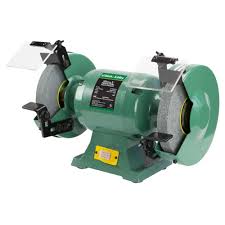
In any professional fabrication or metalworking environment, choosing the right grinding tool is essential for efficiency, safety, and output quality. Two of the most commonly used options are the industrial bench grinder and portable angle grinders. While both are designed for shaping, sharpening, and finishing metal surfaces, they serve very different roles in a workshop setting.
Understanding the strengths, limitations, and applications of each tool helps workshop owners, fabricators, and apprentices make informed investment decisions. In Kenya’s growing construction and manufacturing sectors, selecting the right metal workshop tools directly impacts productivity, cost efficiency, and work quality.
At Ngong Hills Merchants, professionals are increasingly guided toward tool selection based on application rather than price alone. Choosing between a fixed bench grinder and a portable angle grinder is not just a matter of preference—it is about matching the right tool to the right task.
Understanding the Industrial Bench Grinder
An industrial bench grinder is a stationary power tool mounted on a workbench or stand. It typically consists of two grinding wheels operating at high speed, used for sharpening tools, smoothing metal edges, and removing excess material.
This tool is widely used in workshops where precision and stability are required. Because it is fixed in place, it provides consistent control, making it ideal for repetitive sharpening tasks such as chisels, drill bits, and cutting tools.
The industrial bench grinder is valued for its stability and accuracy. Since the tool is anchored, the operator can focus on precision rather than control, reducing fatigue and improving consistency over time.
However, its stationary nature limits mobility, meaning it is best suited for workshop environments rather than fieldwork.
Understanding Portable Angle Grinders
Portable angle grinders are handheld power tools designed for flexibility and mobility. They are equipped with rotating abrasive discs that can cut, grind, polish, or clean metal surfaces depending on the attachment used.
Unlike bench grinders, angle grinders are highly versatile and can be used in construction sites, fabrication yards, and outdoor environments. They are essential metal workshop tools for tasks that require movement, such as cutting pipes, trimming steel bars, or removing rust from surfaces.
Their portability makes them ideal for on-site work where materials cannot be easily transported to a fixed workstation.
However, because they are handheld, they require a higher level of skill and control to ensure safety and precision.
Key Difference 1: Mobility and Application Environment
The most obvious difference between the two tools is mobility. Bench grinders are fixed installations designed for workshop environments, while angle grinders are portable and can be used anywhere.
If your work involves stationary tool sharpening or repetitive grinding tasks, a bench grinder is ideal. If your work involves field fabrication or mobile cutting tasks, an angle grinder is more practical.
Key Difference 2: Precision vs Flexibility
Bench grinders offer superior precision due to their fixed position and stable operation. They are ideal for tasks that require consistent angles and controlled material removal.
Angle grinders, on the other hand, offer flexibility. They can be used at different angles and positions, making them suitable for complex or irregular cutting tasks.
The trade-off is that angle grinders require more skill to achieve precision compared to bench-mounted systems.
Key Difference 3: Safety Considerations
Safety is a major factor when comparing grinding tools. Bench grinders are generally safer for beginners because both hands can remain free to control the workpiece.
Angle grinders carry higher risk due to their handheld nature, requiring steady control and proper safety gear such as gloves, goggles, and protective clothing.
Proper training in metal workshop tools handling is essential to reduce accidents and ensure safe operation in both cases.
Key Difference 4: Power and Performance
Bench grinders typically operate at consistent speeds and are optimized for sharpening and smoothing tasks. They provide steady performance over long periods without fatigue.
Angle grinders offer variable performance depending on disc type, pressure, and user control. They can handle cutting, grinding, and polishing, making them more versatile but less specialized.
Key Difference 5: Versatility of Use
Angle grinders are far more versatile compared to bench grinders. They can be used for cutting metal pipes, grinding welds, polishing surfaces, and even masonry work with the right attachments.
Bench grinders are more specialized and are mainly used for sharpening and surface finishing tasks in a controlled environment.
Key Difference 6: Maintenance and Durability
Bench grinders require minimal maintenance but must be securely mounted and periodically checked for wheel wear and alignment.
Angle grinders require more frequent maintenance due to their portable nature and higher exposure to dust, impact, and field conditions.
Proper care of both tools ensures long service life and consistent performance.
Key Difference 7: Cost and Investment Value
From a cost perspective, angle grinders are generally more affordable and accessible, making them popular among small workshops and mobile technicians.
Industrial bench grinders are a long-term investment for established workshops that require consistent sharpening and finishing capabilities.
Choosing between them depends on workshop size, workload, and type of metalwork being performed.
At Ngong Hills Merchants, professionals are advised to evaluate tool investment based on workflow efficiency rather than upfront cost alone.
Which Tool Should You Choose?
The choice between an industrial bench grinder and portable angle grinders depends entirely on your workflow.
If your work is stationary, repetitive, and focused on precision sharpening, a bench grinder is the better option. If your work involves mobility, cutting, and diverse field applications, an angle grinder is essential.
In many professional workshops, both tools are used together to complement each other’s strengths.
Building a Professional Workshop Setup
A well-equipped workshop does not rely on a single tool but on a combination of equipment that supports different tasks. Grinding, cutting, polishing, and sharpening all require different tools for optimal efficiency.
Professionals sourcing reliable equipment often explore our complete range of metal workshop tools to ensure they have the right tools for every application.
Industrial grinding tools play a critical role in fabrication and construction work. Understanding their differences ensures better investment decisions, improved safety, and higher productivity in workshops across Kenya.
Your One-Stop Hardware Partner in Ngong
Imagine completing your project with the right tools, the best materials, and expert advice. At Ngong Hills Merchants, we turn your DIY or construction vision into reality with a complete selection of plumbing, electrical, glass, and sanitary ware.
Contact our team for a consultation and get the right supplies, right now.
QUALITY HARDWARE & SUPPLIES IN NGONG ✔ Complete Range of Plumbing & Electrical ✔ Power Tools, Adhesives & Paints ✔ Glass, Framing & Sanitary Ware ✔ Serving Ngong, Karen, Matasia, Kiserian & beyond.
Request Your Free Consultation: Ngong Hills Merchants
Email: ngonghillsmerchants [at] gmail.com
Phone: +254 715974811
Visit Us: Ngong Township, Ngong, Kenya
Website: https://ngonghillsmerchants.com/

Build with Confidence. Offering reliable tools and materials, Ngong Hill Merchants is committed to supporting your projects with excellence and integrity.
Contact Us



Copyright © 2025 Ngong Hills Merchants Powered By Twinfusion.